Bringing science on chain with Bio.xyz
Decentralized science, or DeSci, is a growing movement that uses Web3 tools to fund, govern, and share scientific research more openly than traditional institutions allow. Bio.xyz is one of the protocols building this ecosystem, helping research-driven teams launch and sustain their projects on chain.
In 2025, I joined Bio as a freelance UX/UI designer, working with a distributed team and stepping into the rabbit hole of Web3 app development. I collaborated with cross-functional teams across several apps in the Bio ecosystem, advocating for user needs and pushing for transparency through reporting and governance initiatives. Along the way, I set up a design ops strategy to keep our UI library up to date and completed a full overhaul of the design system.
Two projects show this work best: Buildspace, a launch portal for DeSci founder teams, and the Reporting & Governance tools contained therein, which are designed to make accountability a built-in part of the Bio ecosystem.
Bio Buildspace: The portal to De-Sci
Buildspace is where founder teams transform their ideas into projects that are ready to launch on Bio protocol. I developed the concept for this platform from the ground up alongside with a product manager colleague and implemented it with a web developer in about 10-12 weeks.
Previously, the internal Bio operations team spent a lot of time and energy coordinating teams seeking to launch via email, via Notion docs, and Airtables. Buildspace provides a clearly outlined path with guidance through the launch preparation phase.
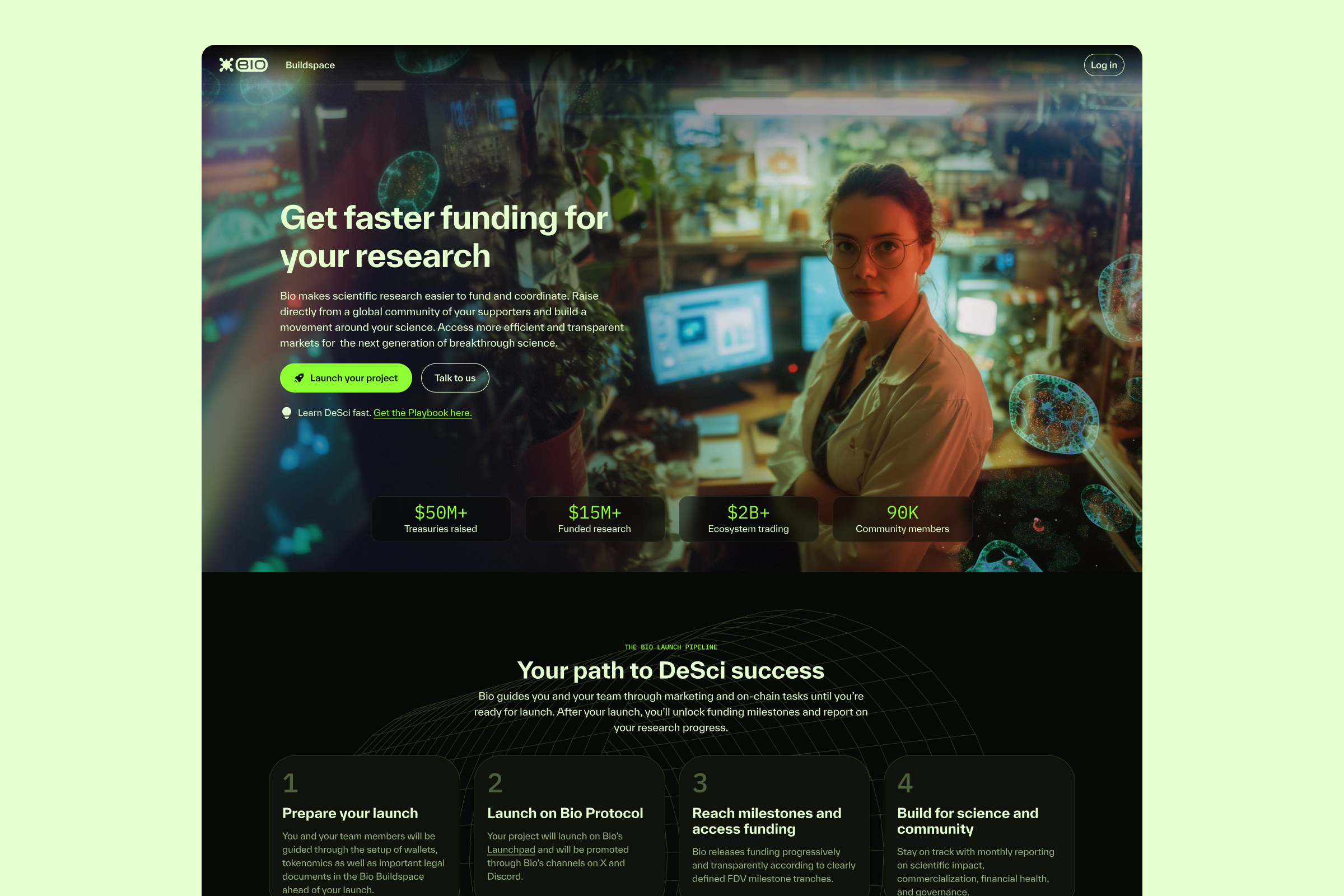
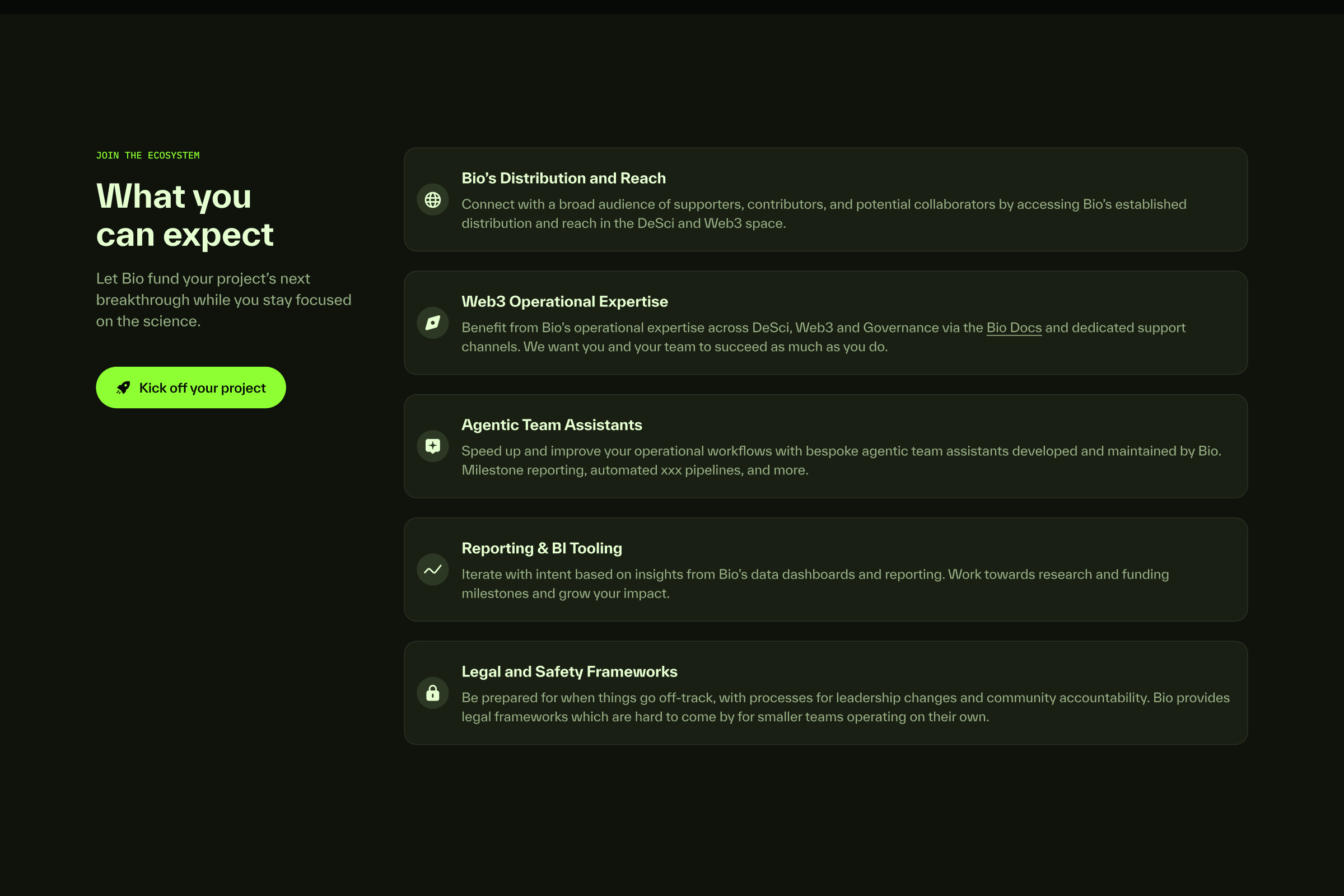
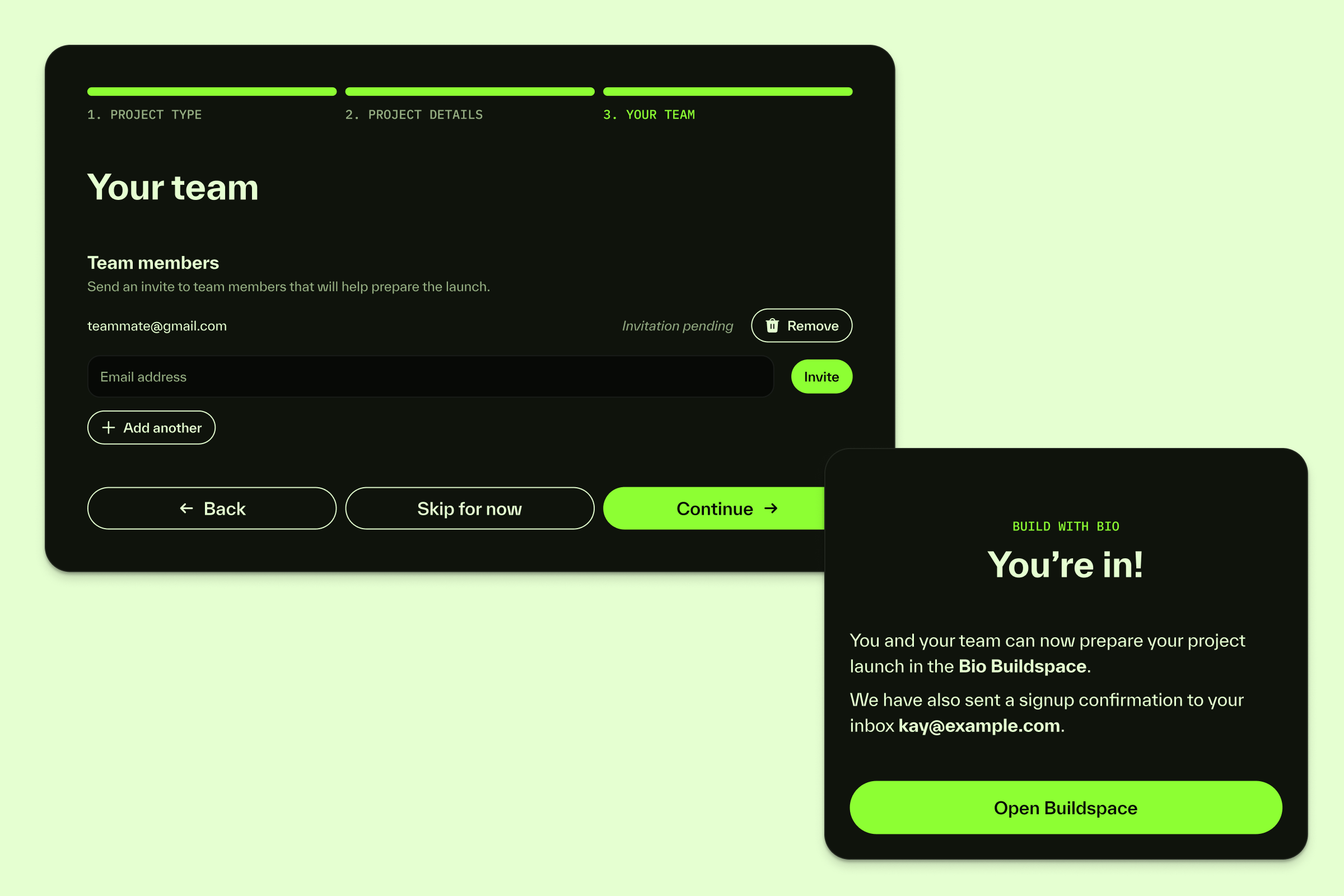
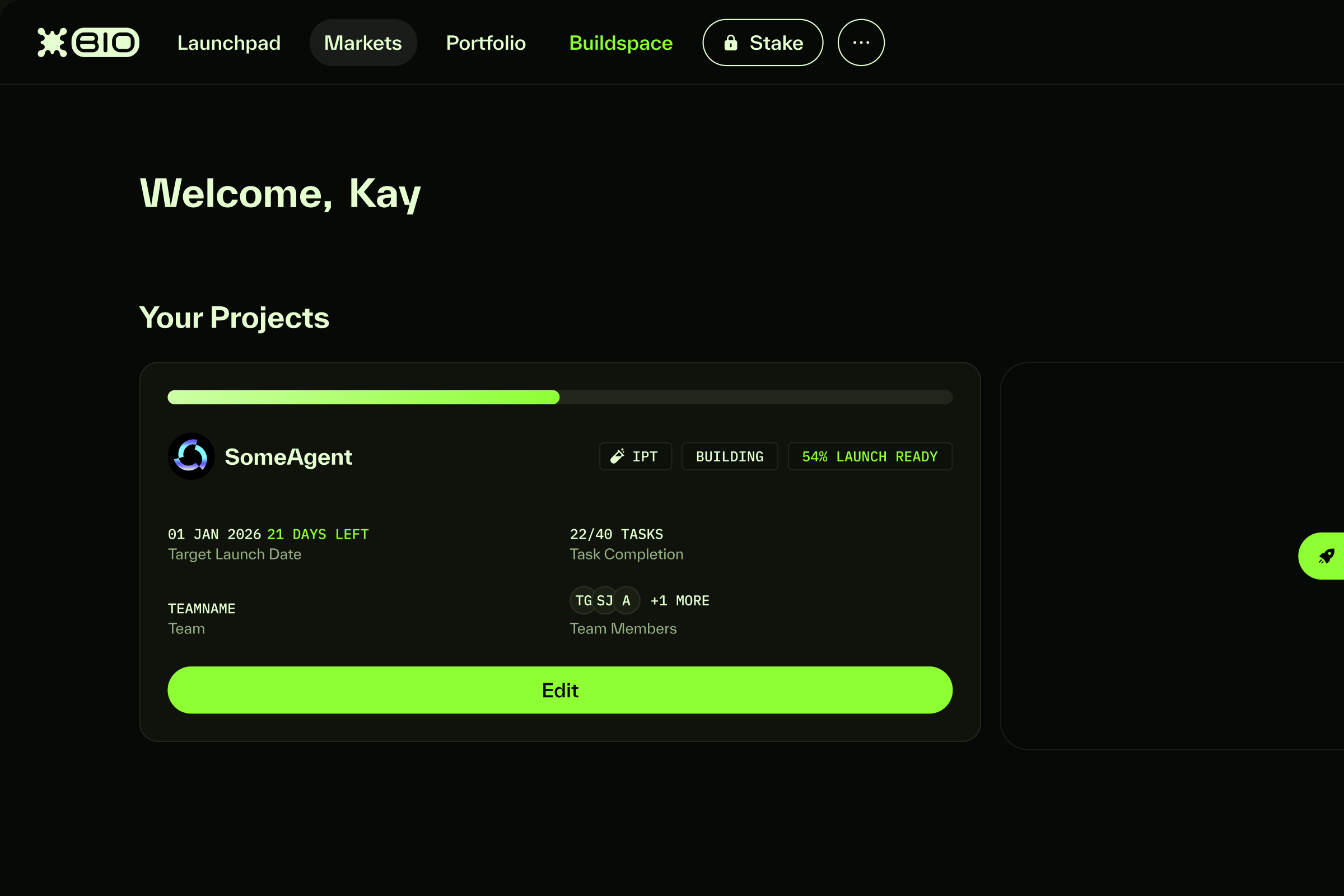
After signup and onboarding, team members find their newly created DeSci project on their dashboard. Projects clearly indicate team members with access, target launch date as well as the progression towards 100% launch readiness.
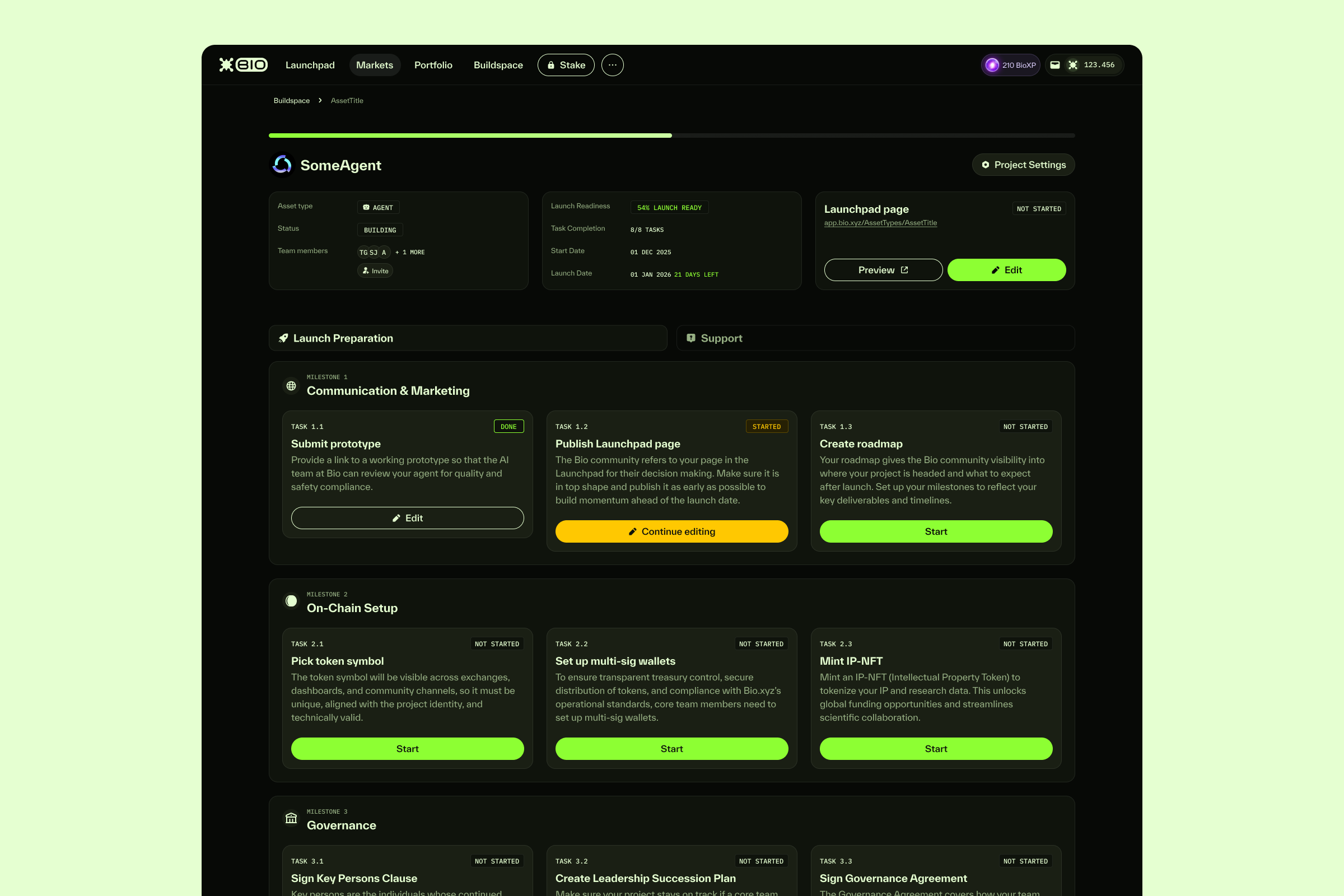
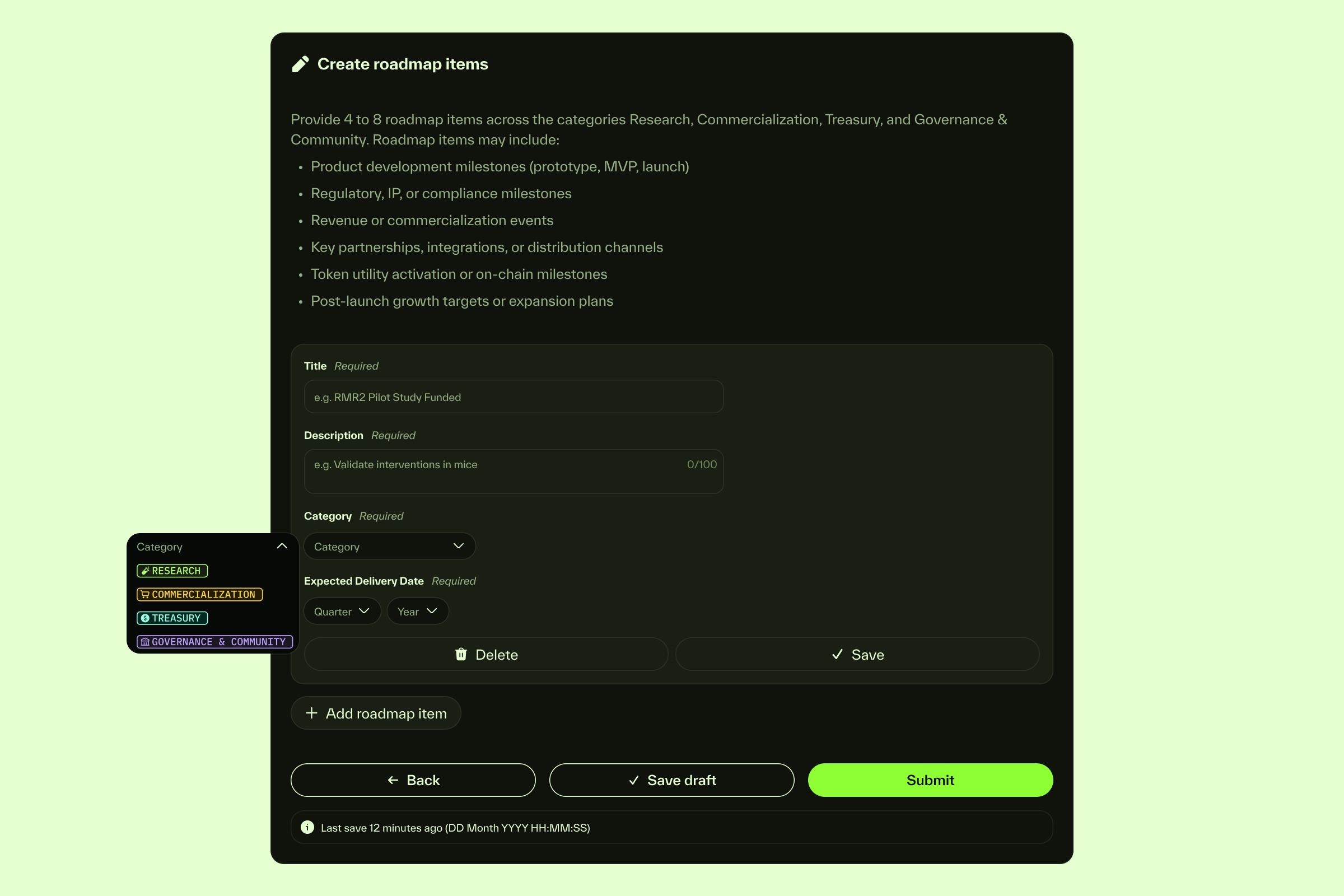
To reach 100% launch readiness, teams need to complete a set of administrative tasks, ranging from communication & marketing preparations to on-chain setup. At 100% launch readiness, teams submit a launch request which then pings a Bio.xyz admin to review the project and its settings.
Reporting and Governance: Two sides of the same coin
And that coin is minted with the word "accountability".
Governance in Web3 is understood differently depending on who in the community you talk to. For Bio.xyz, Governance is the framework by which mutual accountability between the protocol and launched projects is ensured. In effect, it comprises a set of legal and operational agreements which both sides are expected to uphold post-launch. The expressed intent is to counteract the ecosystem's inherent volatility and to send a strong signal to investors that they are guarded against "pump and dump" schemes when interacting with projects on Bio protocol.
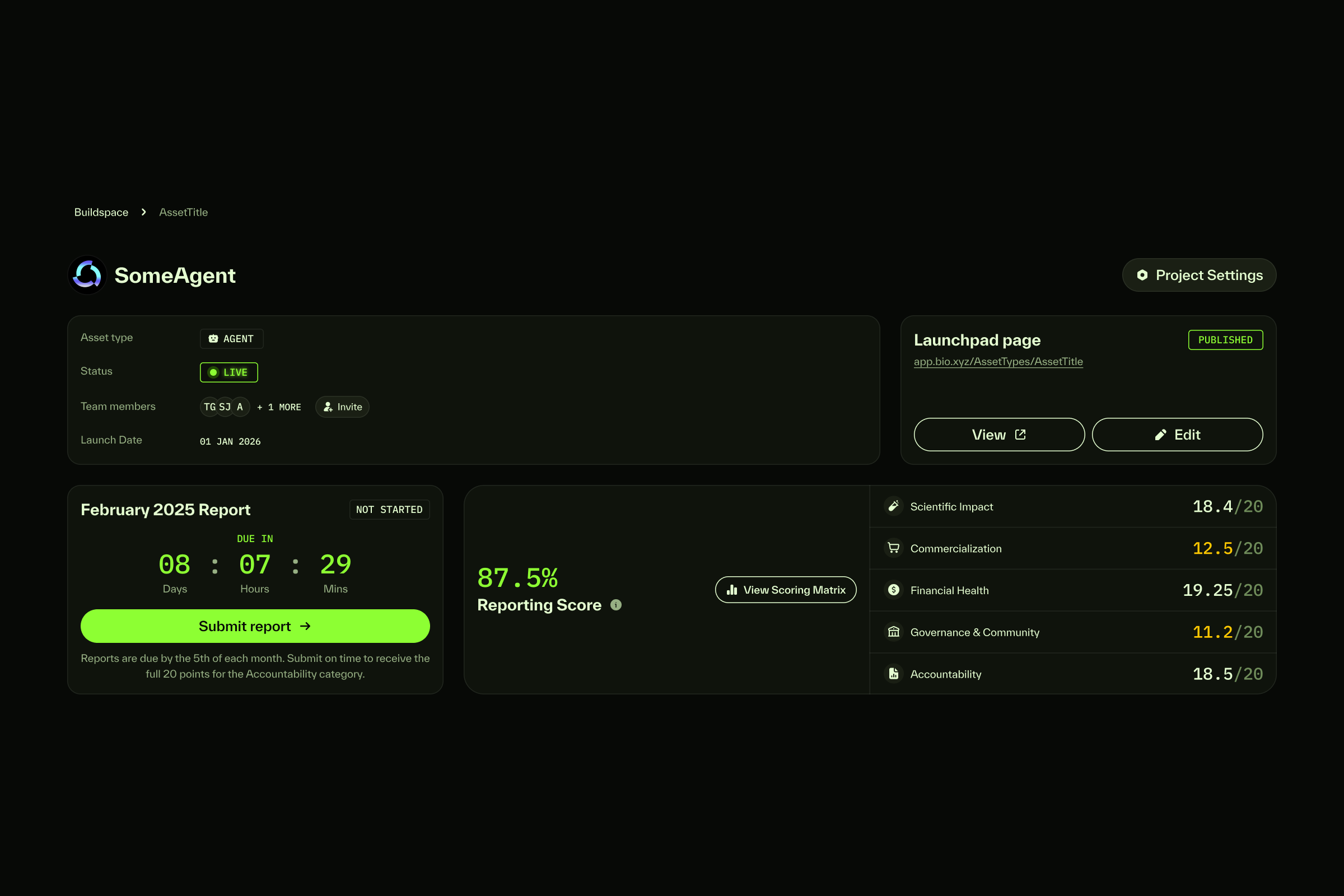
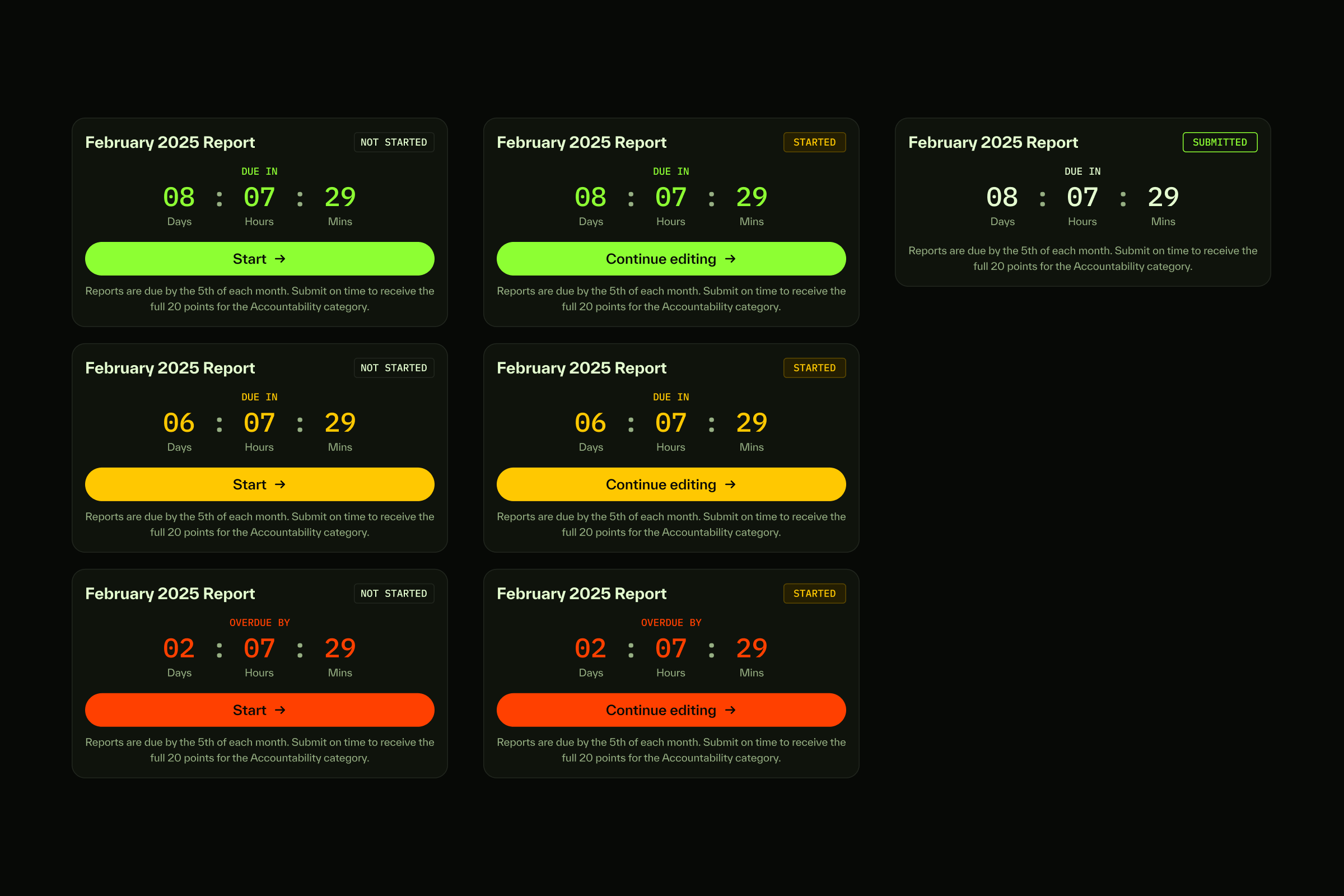
In my role as UX/UI designer, I helped shape the overall approach toward Reporting & Governance at Bio.xyz, and subsequently laid the groundwork for increased transparency: Firstly, by enhancing the existing Buildspace platform with Reporting tools for project teams and Bio admins. Secondly, by breaking down a lengthy "Governance Agreement" documents into manageable flow and tasks for team members to step through.
Takeaways
Trust in a product is built from consistency, because every repeated pattern is a small promise that the product keeps.
In Buildspace, that meant giving every task the same structure (a short description, guidance and support, then the action), writing in plain language so users know what a task asks of them and what follows from it.
Trust is also earned in the unglamorous details: a status label that always means the same thing, an error message that says what to do next. I turned a partly customized Figma template, full of duplicate and unused variables and near-identical pills, dropdowns, and toasts, into a bespoke, lean and reliable UI library.
Design ops ensure that the whole team profits off of these improvements: Clear ownership rules and monthly design ops meetings kept our three-person design team aligned, and close collaboration with our web developers, who built the reusable components in Storybook, carried that consistency through to code.
The results: the Ops team spent less time explaining the basics and more time scouting the next generation of projects, with one place to follow every team that wants to launch on Bio.xyz. We designed faster, tech debt in the Bio apps is going down instead of up with each new feature.
Get in touch
If you're building something – in Web2 or Web3 – that needs a designer who cares about consistency and clarity, I'd love to hear from you.